Growing up, I only opened windows during spring cleaning or after burning dinner. Sound familiar? For years, I thought keeping windows closed meant keeping my home cleaner and more comfortable. Turns out, I had it backward.
Your windows aren’t just for emergencies—they’re one of your most powerful tools for maintaining a healthy home. Opening them strategically can dramatically improve your indoor air quality, protect your family’s health, and even save you money on energy bills.
Let me share what I’ve learned about when, why, and how to open your windows for maximum benefit.
The Surprising Truth About Your Indoor Air
Here’s something that might shock you: the air inside your home is likely 2-5 times more polluted than the air outside—and in some cases, up to 10 times worse. Even if you live near a factory or busy highway, your indoor air quality is probably lower than you think.
Why? Because modern homes are built to be airtight for energy efficiency. While this keeps your heating and cooling bills down, it also traps pollutants inside. Without proper ventilation, these contaminants accumulate and recirculate through your home.
What’s Lurking in Your Indoor Air?
Your home harbors a surprising variety of invisible pollutants:
Volatile Organic Compounds (VOCs): These chemicals come from paints, varnishes, cleaning products, air fresheners, cosmetics, and even your furniture. They vaporize at room temperature and can persist in your air long after you’ve finished using these products.
Carbon Dioxide: Every time you exhale, you add CO₂ to your indoor air. In a sealed home with multiple occupants, levels can climb quickly.
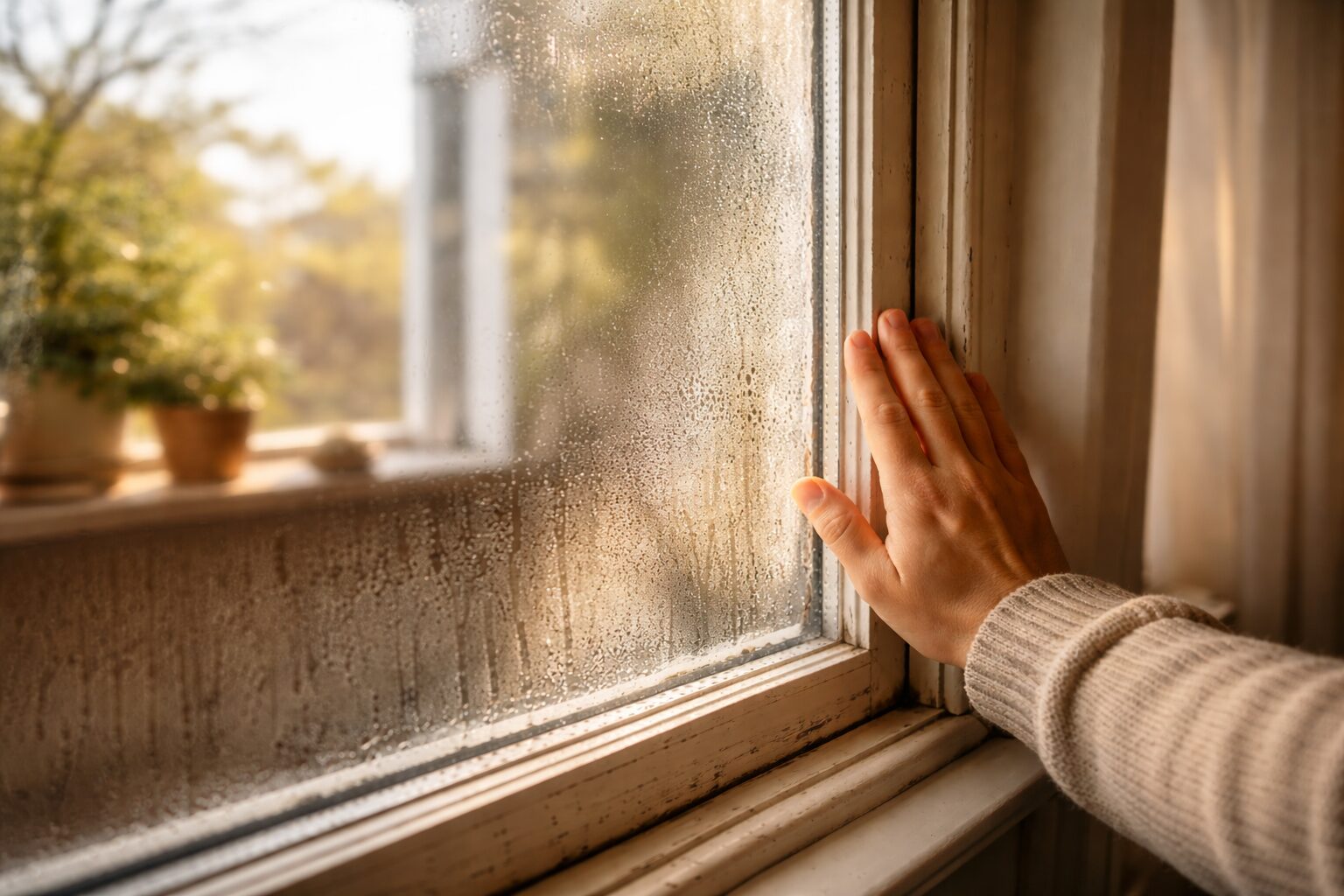
Excess Humidity: Showers, cooking, and even breathing add moisture to your air. This creates the perfect breeding ground for dust mites and mold.
Cooking Fumes: Frying, grilling, and high-heat cooking release particles and gases into your air that can linger for hours.
Dust, Pollen, and Allergens: These particles settle on surfaces and become airborne again with normal activity.
The Health Impact
This indoor air pollution isn’t just unpleasant—it can seriously affect your health. Exposure to VOCs can cause eye, nose, and throat irritation, headaches, nausea, dizziness, and difficulty breathing. Long-term exposure can damage your liver, kidneys, and central nervous system.
The good news? Opening your windows for as little as 5 minutes a day can improve your air quality by letting out stale air and decreasing the concentration of indoor pollutants.
Even better, fresh outdoor air brings in beneficial bacteria that help diversify your indoor microbiome, which can actually strengthen your immune system.
The Daily Window Opening Habit
So how often should you actually open your windows? The answer is simpler than you might think.
The 5-15-20 Rule
Minimum: 5 minutes daily
This is the absolute baseline for maintaining decent indoor air quality.
Ideal: 15-20 minutes daily
This duration provides optimal air exchange without wasting significant energy.
Method: Create Cross-Ventilation
Don’t just crack one window. Open your front and back doors along with windows along the path between them. This creates a draft that efficiently pushes out stale air and pulls in fresh air.
Timing Is Everything
Best Times:
- Early morning before temperatures rise
- Late evening/night when outdoor air has cooled
Why These Times? Opening windows during cooler periods prevents your home from heating up (in summer). You get the air quality benefits without the energy penalty.
Even in Winter: Yes, even in cold weather! A brief 5-minute window opening won’t significantly impact your heating bill, but it will make a noticeable difference in air quality. Your home’s insulation retains most of its heat during such short ventilation periods.
Your Seasonal Window Strategy
Different seasons call for different approaches to window ventilation.
Summer: Be Strategic About Heat
The Golden Rule: Close windows when the outdoor temperature exceeds your indoor temperature. Opening them at this point only invites hot air inside, making your air conditioner work harder.
Your Summer Schedule:
Evening (when sun goes down):
- Check that outdoor temp is cooler than indoor
- Open windows on opposite sides of your home
- Turn off or reduce air conditioning
- Use fans to boost cross-ventilation
Morning (before it heats up):
- Close windows before outdoor temperature rises
- Draw blinds and curtains to block sun
- Turn AC back on if needed
Humidity Check: Here’s a crucial detail many people miss: if outdoor humidity exceeds 65%, keep your windows closed even if the temperature is cooler. Letting in humid air means your AC will have to work much harder the next day to remove all that moisture. Everything in your home will feel sticky and uncomfortable.
Winter: Quick Ventilation Wins
Winter window opening is brief but important. Sealed homes in winter accumulate even more pollutants because we’re running heating systems and spending more time indoors.
Winter Strategy:
- Open windows for just 5 minutes once daily
- Choose the warmest part of the day
- Focus on rooms you use most
- The brief air exchange improves quality without meaningful heat loss
Spring and Fall: Your Window-Opening Paradise
These shoulder seasons offer ideal conditions for extended window opening. When evening temperatures average 70°F or less with low humidity, you can often turn off your HVAC system entirely and rely on natural ventilation.
This is when you can truly enjoy fresh air flowing through your home for hours at a time—and watch your energy bills drop.
When You MUST Open Your Windows
Beyond daily maintenance ventilation, certain activities create pollutants that require immediate window opening.
1. After Cooking
Every time you cook—especially when frying or using high heat—you release particles, gases, and moisture into your air. Your kitchen exhaust fan helps, but it works best when combined with open windows.
Pro Tip: If your range hood vents outside (not just recirculates), run it while cooking and for 10-15 minutes after. Pair this with open windows in adjacent rooms for maximum pollutant removal.
2. During and After Painting
Paint is one of the biggest sources of VOCs in your home. Even “low-VOC” paint releases chemicals as it dries.
Painting Window Protocol:
- Open windows before you start painting
- Keep them open during the entire painting process
- Continue ventilating for days to weeks after the last coat dries
- The chemicals in paint adhesives and compounds can be dangerous for indoor air quality, so don’t rush this process
3. With New Furniture
That “new furniture smell”? It’s called off-gassing, and it’s the release of VOCs from:
- Particle board and engineered wood (which contain formaldehyde)
- Foam cushions
- Fabric treatments and stain-resistant coatings
- Adhesives and glues
- Paints and finishes
New Furniture Game Plan:
Before bringing it inside:
- If possible, unpack and let furniture air out outdoors for several days
- Sunlight and fresh air speed up initial off-gassing
Once inside:
- Place in a well-ventilated room
- Open windows as often as possible for several weeks
- The majority of off-gassing occurs in the first few weeks to months, though it continues throughout the furniture’s life
4. When Using Cleaning Products
Many cleaning products release VOCs. Even natural products can temporarily affect air quality. It’s particularly important to increase ventilation when using:
- Disinfectants
- Oven cleaners
- Carpet cleaners
- Products with strong fragrances
- Anything in aerosol form
5. After Home Improvements
Any renovation activity warrants extended ventilation:
- New carpeting (especially with padding and adhesives)
- Laminate or vinyl flooring
- New cabinets
- Insulation work
- Caulking and sealants
These materials off-gas significantly when new. Confirm each product’s safety instructions, and ventilate for as long as recommended—often several weeks.
6. When Air Feels “Off”
Trust your nose and lungs. If your indoor air feels musty, smelly, or stuffy, that’s your signal to open windows immediately. These sensations indicate elevated pollutant levels or inadequate ventilation.
When NOT to Open Windows
Strategic window opening also means knowing when to keep them closed.
Check Air Quality First
Before opening windows, consider outdoor air quality:
Air Quality Index (AQI):
- 0-50 (Good): Safe to open windows
- 51-100 (Moderate): Generally safe for most people
- 101+ (Unhealthy): Keep windows closed, especially if you have respiratory sensitivities
- 151+ (Unhealthy for everyone): Windows should remain closed
Check your local AQI at AirNow.gov or through weather apps.
Other Times to Keep Windows Closed
High Pollen Days: If you have allergies, check pollen forecasts. During peak pollen season, early morning often has the highest counts.
Wildfire Smoke: Even if fires are distant, smoke can travel hundreds of miles. Keep windows closed and use air purifiers with HEPA filters.
High Humidity: When outdoor humidity exceeds 60-65%, the moisture you let in will make your home uncomfortable and force your AC to work overtime the next day.
Extreme Temperatures: When it’s significantly hotter or colder outside than your thermostat setting, opening windows forces your HVAC system to work much harder. The air quality benefit doesn’t outweigh the energy cost and system strain.
High Pollution Events: Near busy roads during rush hour, or if you live downwind from industrial facilities, time your ventilation for off-peak hours.
Maximizing Your Window Ventilation
It’s not just about whether you open windows—it’s about how you open them.
Create Cross-Ventilation
The most effective ventilation happens when air has a clear path through your home:
- Open windows on opposite sides of your house
- Open interior doors to create a continuous airflow path
- The incoming cool air pushes out the stale warm air
Enhanced Cross-Ventilation: Use fans to boost natural airflow. Set ground-level fans near windows to pull in cool outdoor air. Place upper-story fans to push out warm air (heat rises). This “stack effect” dramatically improves air exchange.
Coordinate with Your Home Systems
Bathroom Fans: Run them during and after showers to remove humid air directly, rather than letting it spread through your home.
Kitchen Hood: Use it whenever you cook. A properly vented range hood removes pollutants at the source before they circulate.
HVAC Fan Mode: Many systems have a “fan only” setting. When you can’t open windows but want air circulation, this mode moves air without heating or cooling.
When You Can’t Open Windows
Sometimes outdoor conditions don’t cooperate. In these situations:
Air Purifiers: Choose units with both HEPA filters (for particles) and activated carbon filters (for gases and VOCs). HEPA alone won’t remove chemical pollutants.
Source Control: The best strategy is preventing pollutants in the first place:
- Choose low-VOC or zero-VOC paints
- Select solid wood furniture over particle board
- Use fragrance-free cleaning products
- Avoid synthetic air fresheners (they just add more chemicals)
- Store paints, solvents, and chemicals in garages or sheds, not inside
Monitor Your Air: Consider an indoor air quality monitor that tracks VOCs, particulate matter, CO₂, and humidity. This helps you make informed decisions about when to ventilate.
The Year-Round Benefits of Opening Windows
Regular window opening delivers benefits beyond just air quality:
Energy Savings: During mild weather, natural ventilation can replace mechanical cooling and heating, reducing your utility bills.
Better Sleep: Fresh, cool air promotes better sleep quality. Many people find they sleep more soundly in well-ventilated rooms.
Humidity Control: Proper ventilation helps regulate indoor humidity levels naturally, preventing mold growth and dust mite proliferation.
Mental Health: Connection to the outdoors—even through an open window—can improve mood and reduce stress. Fresh air and natural sounds create a more pleasant living environment.
Extended HVAC Life: Less reliance on your heating and cooling systems means less wear and tear, potentially extending their lifespan.
Your Action Plan: Starting Today
Changing your window habits doesn’t require a complete lifestyle overhaul. Start small and build from there.
Week 1: Establish the Basic Habit
- Set a daily alarm for your best ventilation time (early morning or evening)
- Open windows for 5-10 minutes each day
- Create cross-ventilation by opening windows on opposite sides
- Notice how the air feels after ventilation
Week 2: Optimize Timing
- Check outdoor temperature before opening windows
- Adjust your ventilation schedule based on the season
- Extend to 15-20 minutes if conditions allow
- Close windows before temperatures become unfavorable
Week 3: Address Specific Events
- Open windows immediately after cooking
- Ventilate after cleaning with chemical products
- Plan ahead for any painting or furniture purchases
Ongoing: Make It Automatic
- Build window opening into your morning or evening routine
- Teach family members about the importance of ventilation
- Monitor how you feel—better air quality often means fewer headaches, better sleep, and improved focus
The Bottom Line
Opening your windows isn’t about reacting to emergencies or following spring cleaning traditions. It’s about taking daily action to maintain healthy indoor air quality.
The research is clear: even brief daily ventilation makes a significant difference. Those 5-15 minutes of fresh air exchange reduce indoor pollutant concentrations, introduce beneficial bacteria, and create a healthier living environment for you and your family.
Your windows are tools—powerful ones—for protecting your health. Use them wisely, use them regularly, and breathe easier knowing you’re taking control of your indoor air quality.
Quick Reference: The Window Opening Checklist
Open Windows:
✓ Daily for 5-15 minutes during cool periods
✓ After cooking, especially frying or high-heat methods
✓ During and after painting (days to weeks)
✓ With new furniture (several weeks)
✓ When using cleaning products
✓ Whenever air feels stuffy or smells off
Keep Windows Closed:
✗ When outdoor temp exceeds indoor temp (summer)
✗ When humidity exceeds 65%
✗ During high pollen days (if you have allergies)
✗ When AQI exceeds 100
✗ During wildfire smoke events
✗ In extreme cold or heat
Remember: Fresh air is free medicine. Five minutes a day can transform your indoor air quality. Start today—your lungs will thank you.