Published by WindowMan Inc. | Winter Home Maintenance
The good news? Most winter window and door problems have straightforward fixes. Below, we’ve broken down the five most common issues our customers encounter every season — along with practical troubleshooting steps and guidance on when it’s time to call in the pros.
1. 💨Drafts, Air Leaks & Failing Weatherstripping
One of the most widespread winter complaints: you can feel cold air sneaking in around your windows or doors, driving up your heating bill and making rooms uncomfortably chilly. The usual culprit is worn or damaged weatherstripping — the sealing material that lines the edges of doors and windows. Over years of opening, closing, freezing, and thawing, it compresses, cracks, and loses its effectiveness. In some cases, extreme cold causes the weatherstripping at the base of a door to actually freeze to the metal sill beneath it, tearing away completely when the door is opened.
A quick test: hold a lit candle or a piece of tissue near door/window edges on a windy day. If it flickers or moves, air is getting through.
🔧 The Fix
Inspect all weatherstripping and replace any sections that are cracked, compressed, or torn — this is an easy DIY project with a kit from your local hardware store. For doors, also check the door sweep along the bottom; if you can slide a folded piece of paper under the door, the sweep needs replacing. To prevent freezing, wipe the sill area dry and apply a thin coating of WD-40 or silicone spray before temperatures drop below freezing.
⚡ Pro Tip: Weatherstripping should be inspected and potentially replaced every 2–3 years.
2. 🌫Window Condensation & Foggy Double-Pane Glass
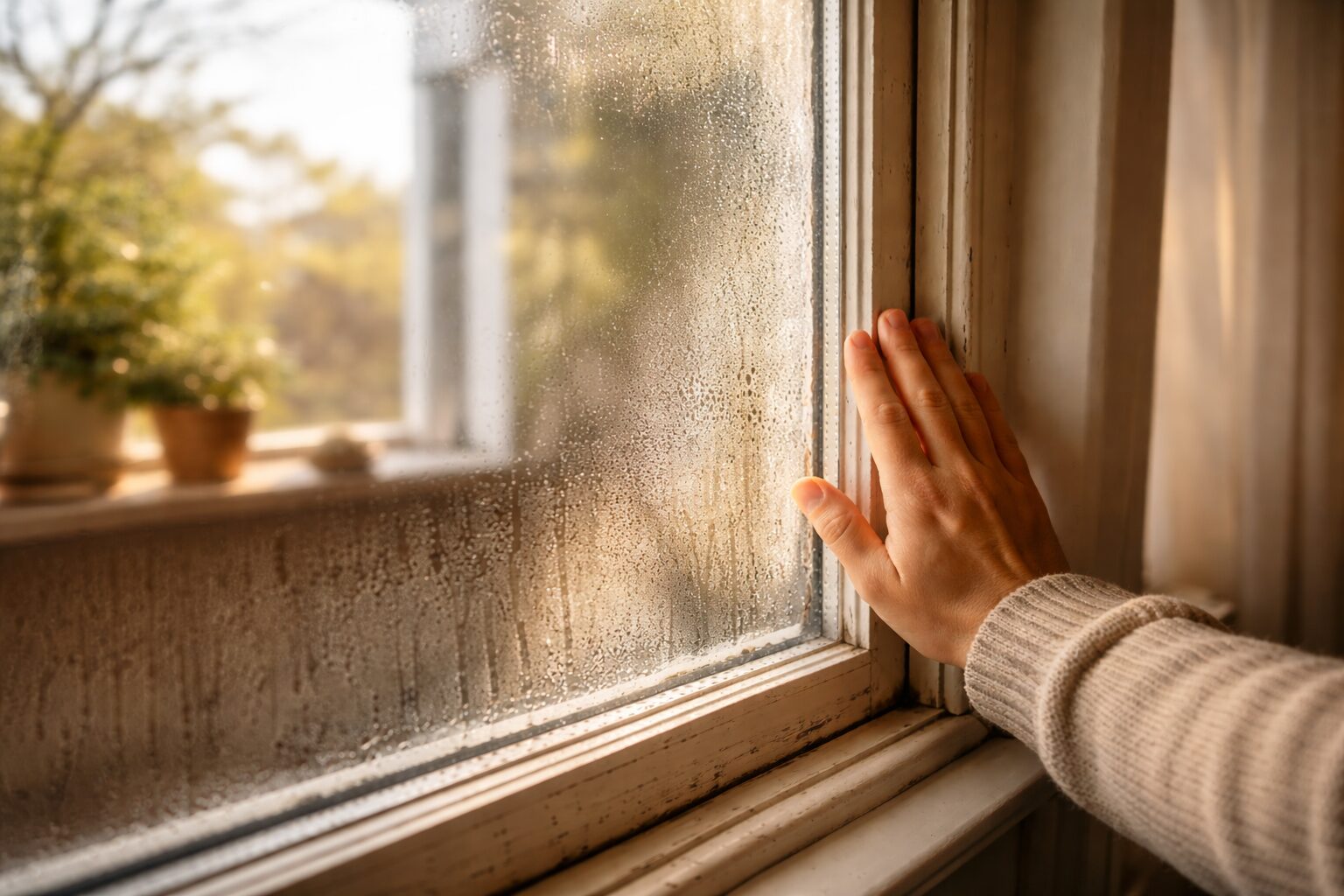
Waking up to foggy, dripping windows is one of winter’s telltale signs. A small amount of condensation on the interior surface of a window on a very cold morning is normal — it’s the same principle as a glass of ice water on a humid day. But persistent, heavy condensation — or fog trapped between the panes of a double-pane window — signals a more serious issue.
When fog appears between the glass panes, the sealed air (or insulating gas, like argon) barrier has been compromised. Moisture is now trapped inside, destroying the window’s insulating ability and making your home less energy-efficient. Ongoing surface condensation can also damage wooden frames, encourage mold growth, and weaken nearby walls over time.
🔧 The Fix
For surface condensation, improve indoor air circulation with exhaust fans in kitchens and bathrooms, use a dehumidifier, and ensure your home’s humidity stays between 35–50%. For fog between the panes, unfortunately, the seal is gone and the window unit will need to be replaced — no DIY patch will restore the insulating barrier. Contact WindowMan Inc. to assess whether a pane replacement or a full window upgrade is the right call.
⚡ Pro Tip: Modern Low-E vinyl windows are engineered to minimize condensation — worth considering if foggy windows are a recurring problem
3.🚪Sticking, Binding & Hard-to-Close Doors
Does your front door suddenly require a shoulder-check to close? You’re not imagining it. Cold temperatures cause building materials to contract and expand — and with wood doors, humidity shifts cause the door or its frame to swell, warp, or shift out of square. The result is a door that binds, particularly in the upper corner of the jamb, or one that simply refuses to latch. Even well-built fiberglass and steel doors can experience alignment issues when temperature extremes affect the surrounding frame.
Loose hinge screws are often the hidden cause: as temperature and humidity fluctuate, screws gradually work their way loose, causing the door to sag and rub against the frame. A misaligned strike plate — where the latch no longer meets the recess cleanly — is another frequent offender.
🔧 The Fix
Start simple: check all hinge screws and tighten them (replace any stripped screws with slightly longer, wider ones for a stronger hold). Inspect the strike plate alignment — the gap between the door and frame (the “reveal”) should be roughly the thickness of a nickel all the way around. If the door is severely swollen due to moisture, lightly sand the binding area until movement improves, then seal the wood to prevent further moisture absorption. For stubborn warping or frame damage, a professional assessment is recommended.
⚡ Pro Tip: Pre-season, tighten all hinge and strike plate screws before cold weather hits — this prevents most binding issues before they start.
4. 🔒Frozen Door Locks & Stiff Hardware
Few things are more frustrating on a frigid morning than a key that won’t turn — or a lock mechanism that’s frozen solid. When moisture seeps into a lock cylinder and temperatures plunge, it freezes and can jam the entire mechanism. Exterior door knobs, deadbolts, and sliding patio door latches are all vulnerable. Beyond locks, the lubricating oil inside hinges can thicken and dry out in cold temperatures, leading to squeaky, stiff doors and — in the case of sliding doors and windows — tracks that become gummy and difficult to operate.
🔧 The Fix
For a frozen lock, use a commercial de-icer spray or carefully warm your key with your hand before inserting it (avoid open flames — this can damage the key). A hairdryer on the lock can also help melt the ice safely. Avoid pouring hot water on locks — it refreezes and worsens the problem. To prevent recurrence, apply a graphite-based or silicone lock lubricant to the cylinder each fall. For squeaky hinges and stiff tracks, petroleum jelly or WD-40 applied to hinges and a silicone spray on window/door tracks will restore smooth operation.
⚡ Pro Tip: Installing a storm door over your entry door provides an extra layer of protection that significantly reduces the chance of lock freezing
5. 🪟Cracked Glass & Failed Window Seals
Cold weather puts real stress on glass. Rapid temperature swings — like a sunny afternoon followed by a hard freeze — can cause thermal stress cracks that start at the edge of a pane and work inward. While glass is less likely to break when it’s uniformly cold, a crack that already existed (from impact or a manufacturing imperfection) can propagate quickly when temperatures drop sharply. Even without a visible crack, older window seals wear out over time — and winter is when you’ll feel the impact most. Failed seals allow cold air infiltration, making certain rooms noticeably colder and causing energy bills to creep up.
Check your window frames too: wood and metal frames are prone to warping from prolonged moisture exposure, which becomes especially obvious in winter when any irregularity creates air gaps and cold spots.
🔧 The Fix
Don’t leave cracked glass until spring — even a small crack accelerates heat loss and can worsen quickly. Check whether your window is under warranty, as many manufacturers cover seal failures and glass defects. For immediate stopgap relief on a drafty window, apply a temporary rope caulk or window insulation film while you arrange a proper repair. Seal any gaps around frames with exterior-grade caulk. For failed double-pane seals or significant frame damage, a professional window inspection will determine whether a pane replacement or full window replacement is the most cost-effective solution.
⚡ Pro Tip: When replacing windows, look for double or triple-pane glass with Low-E coatings and insulated vinyl frames — these dramatically outperform older single-pane units in winter conditions.
Don’t Let Winter Win
Whether it’s a stubborn door, foggy windows, or a draft you just can’t track down — the team at WindowMan Inc. is ready to help. We offer inspections, repairs, and full window and door replacements built for lasting performance.