(A Common Indiana Winter Problem)
You’ve turned up the thermostat—again. Your furnace is running constantly, the utility bill keeps climbing, and yet your living room still feels cold. If that sounds familiar, you’re not alone. This is one of the most common complaints we hear from homeowners across Carmel, Fishers, and Noblesville every winter.
The frustrating part? In many cases, your heating system is doing its job. The real issue is that the heat you’re paying for isn’t staying inside your home.
Why Indiana Homes Lose Heat So Easily
Central Indiana winters are especially hard on homes. Between long cold snaps, frequent freeze–thaw cycles, and steady winter winds, small weaknesses in your home’s envelope get exposed quickly—especially in older homes and newer developments built for speed rather than efficiency.
One of the biggest culprits is right in front of you every day: your windows.
How Old Windows Work Against You
Windows account for 25–30% of a home’s heating and cooling loss. Even if your walls are well insulated, inefficient windows can allow a huge amount of heat to escape.
To put it simply: the heat you’re paying for is finding the easiest way out—and single-paned glass and gaps make that easy.
The Two Main Ways Windows Lose Heat
1. Heat Transfer Through the Glass
About two-thirds of window heat loss happens through the glass itself.
-
Single-pane windows have an R-value of around 1, offering almost no insulation.
-
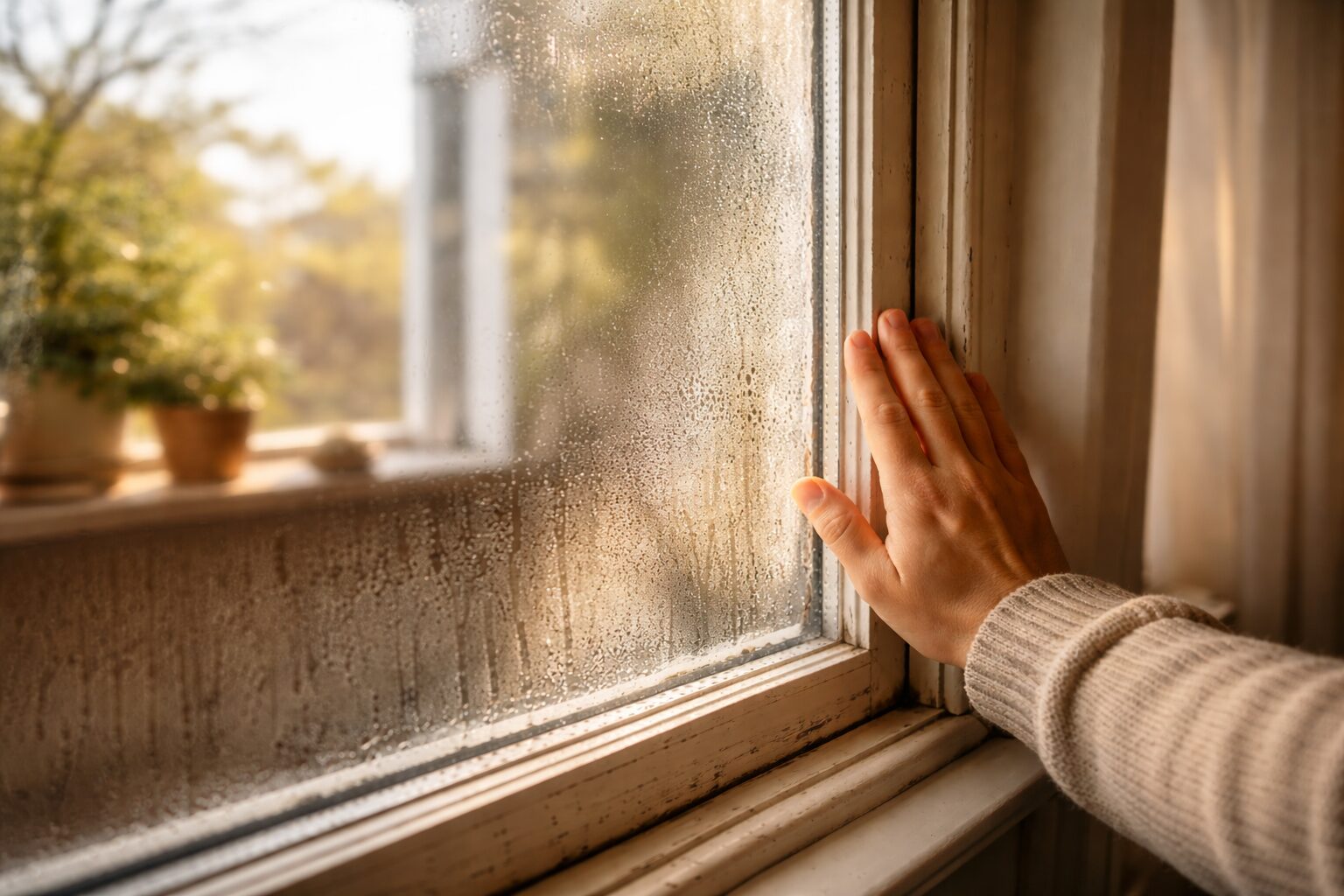
Older double-pane windows often lose effectiveness as seals degrade, meaning you may be heating the air between panes instead of your living space.
2. Air Leaks Around the Frames
The remaining heat loss comes from air infiltration—tiny gaps around frames, worn weatherstripping, or cracked caulk. These leaks may be invisible, but they allow cold air to flow in continuously, making rooms feel drafty no matter how high the thermostat is set.
The Big Misconception About Drafty Homes
Many homeowners assume cold rooms mean they need new windows. But here’s an important truth:
Replacing windows alone rarely fixes a cold house.
The reason is something called the stack effect. Warm air rises and escapes through leaks in the attic and upper levels of your home. As that air leaves, cold outside air gets pulled in from lower levels—around windows, doors, outlets, basements, and crawl spaces.
If you replace windows without sealing those leaks, you’re still losing heat—just through different paths.
What You Can Do Right Now (Quick, Affordable Fixes)
If you need relief this winter without major renovations, these steps can help immediately:
-
Window Film Kits: Inexpensive plastic film adds an insulating layer and reduces drafts. Expect noticeable improvement, especially on older windows.
-
Thermal Curtains: Heavy curtains can cut heat loss when closed at night or on north-facing windows.
-
Draft Stoppers: Simple fabric tubes placed at the base of windows or doors block cold air effectively.
-
Weatherstripping & Caulk: Replacing worn seals around windows is one of the cheapest ways to improve comfort fast.
A Complete, Long Term Solution
For lasting comfort and lower energy bills, a whole-home approach works best:
1. Air Sealing First
Sealing leaks in the attic, basement, rim joists, and around penetrations can reduce energy loss by 5–30%. This step alone often makes homes feel noticeably warmer.
2. Proper Insulation
Many Indiana homes—especially those over 10–15 years old—have insufficient or compressed attic insulation. Current recommendations are 10–14 inches. Without it, heat escapes quickly no matter how efficient your furnace is.
3. Window Upgrades
Once air sealing and insulation are addressed, window upgrades make a meaningful difference.
We recommend:
-
Double or triple-pane glass
-
Low-E coatings
-
Argon or krypton gas fills
-
Low U-factors (0.28 or lower)
-
Professional installation with proper sealing
Storm windows can also be a cost-effective option, especially for older homes.
The Bottom Line
If your house feels cold even with the heat on, the issue usually isn’t your furnace—it’s heat loss. Windows are the key to keeping your home warm and cozy, all winter long.
When you’re ready, Window Man Inc. can help assess your home and recommend solutions that actually work for Indiana winters.
Stay warm out there.