Do I really need an egress window? It’s a question more homeowners are asking as basement remodels surge and code enforcement becomes stricter. Whether you’re finishing a basement, adding a bedroom, or just want to stay compliant with local building codes, understanding egress window requirements can save you from costly mistakes and safety risks.
This guide will help you understand when egress windows are legally required, why they matter for your family’s safety, and whether installing one could be a smart investment—even if it’s not mandated by law.
What Is an Egress Window?
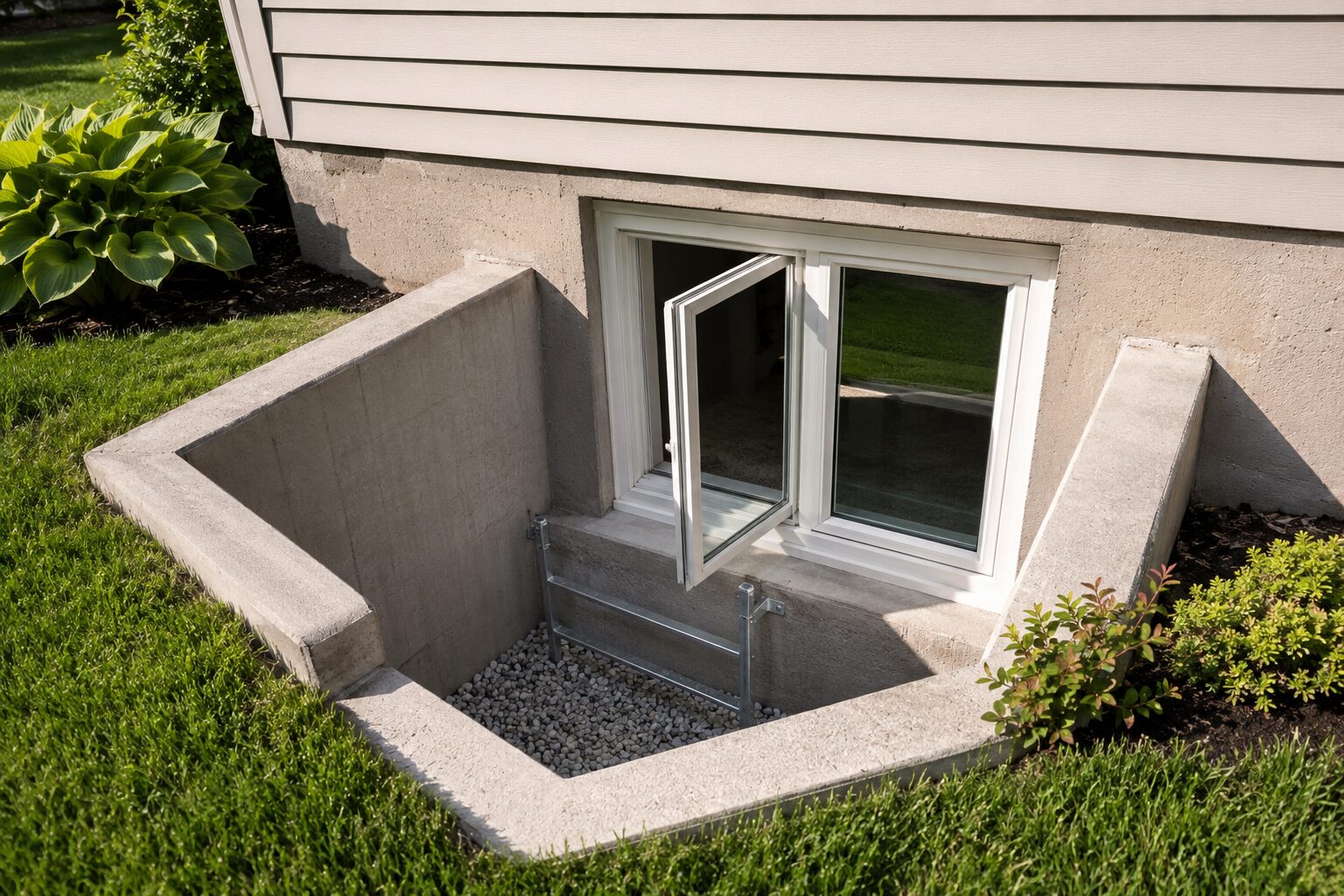
An egress window is a window large enough for safe exit during an emergency. Think of it as your escape route when stairs become inaccessible due to fire, gas leaks, or other dangers.
Key points about egress windows:
• Legal requirement: In many cases, they’re mandated by building codes, not just a safety bonus
• Size specifications: Must meet minimum opening dimensions for a person to escape safely
• Emergency access: Also allows firefighters and rescue personnel to enter quickly
These aren’t just any windows—they must meet specific building code window escape requirements to be considered compliant.
When Is an Egress Window Required by Law?
Basement Bedrooms
If you’re planning to use your basement as a sleeping space, an egress window is typically required by law:
• Any legal bedroom: Must have a code-compliant egress window for occupancy permits
• Minimum size requirements: Must meet basement bedroom code specifications
• Accessibility standards: Window must be reachable and operable by occupants
Finished Basements & Additions
Egress window requirements Indiana and most other states often get triggered during:
• Renovation projects: When finishing previously unfinished basement spaces
• New construction: Any below-grade living spaces typically require egress
• Permit applications: Building departments may require egress compliance before approving work
Rental Property Compliance
Landlords and property managers face stricter enforcement:
• Airbnb hosts: Many municipalities require egress windows for short-term rentals
• Traditional rentals: Code enforcement may be more rigorous for rental properties
• Liability protection: Helps protect property owners from potential legal issues
Key Safety & Insurance Considerations
Beyond legal requirements, egress windows provide critical safety benefits:
Life-saving emergency exits:
• Primary escape route when stairs are blocked by fire or smoke
• Essential during gas leaks or carbon monoxide emergencies
• Allows quick evacuation for elderly or disabled occupants
Insurance implications:
• Homeowner’s insurance may require code-compliant egress for full coverage
• Non-compliant basement bedrooms could void claims
• May reduce liability in case of emergencies
Peace of mind:
• Protects your family’s safety investment
• Demonstrates responsible homeownership
• Reduces worry about basement occupancy
Even If You’re Not Required—Should You Still Install One?
Many homeowners discover egress window benefits extend beyond legal compliance:
Increase usable space:
• Transform basement storage into a legal bedroom
• Add square footage that counts toward home value
• Create rental income opportunities
Improve living conditions:
• Dramatically increase natural light in basement spaces
• Enhance ventilation and air quality
• Make basements feel less like “dungeons”
Boost property value:
• Legal bedrooms command higher resale prices
• Attract more potential buyers
• Demonstrate home’s code compliance to inspectors
What Are the Requirements for an Egress Window?
Typical egress window rules include these specifications:
Opening size:
• Minimum 5.7 square feet of opening area
• At least 20 inches wide and 24 inches high
• Net clear opening (not window frame dimensions)
Height requirements:
• Sill height no more than 44 inches from floor
• Must be operable without keys, tools, or excessive force
• Clear access path to window
Below-grade installations:
• Properly sized window wells required
• Drainage systems to prevent water accumulation
• Well walls must not exceed maximum height without steps
Professional installation considerations:
• Proper flashing and waterproofing
• Structural support for larger openings
• Local permit requirements and inspections
What to Do If You’re Still Unsure
Not sure if your specific situation requires an egress window? Here’s your next steps:
Schedule a professional assessment:
• Get expert evaluation of your basement and local codes
• Understand your options before starting any renovation
• Receive accurate quotes for compliant installation
Plan proactively:
• Address egress requirements before finishing basement spaces
• Avoid costly retrofits by planning ahead
• Ensure proper permits and inspections
Work with experienced professionals:
• Choose contractors familiar with local building codes
• Ensure proper installation and waterproofing
• Get warranty protection for your investment
Conclusion
Not every home needs an egress window, but many more could benefit from adding one than most homeowners realize. Whether driven by legal requirements, safety concerns, or value-adding opportunities, egress windows represent a smart investment in your home’s functionality and your family’s protection.
The key is understanding your specific situation—your home’s layout, your local codes, and your future plans for the space.
Wondering if your home qualifies? We’ll help you find out—no pressure, just answers. Contact Window Man today for your free assessment.