Imagine this: it’s a quiet evening, and you’re curled up on the couch in your newly finished basement. The kids are upstairs asleep, the laundry is humming behind a closed door, and for once—finally—it feels like everything in your house is under control.
Then, the smell of smoke drifts down the staircase.
At first, you think it might just be a candle upstairs or food left on the stove. But as you move toward the steps, the air grows heavier. You can hear faint crackling above you. That’s when you realize the truth: there’s a fire, and your path upstairs is already blocked.
This is exactly the kind of moment most of us don’t like to imagine—but it’s also the moment when an egress window becomes more than a renovation checklist item. It becomes your family’s way out.
Step 1: Stay Calm and Go Straight to the Window
In an emergency, seconds matter. Instead of losing precious time searching for another exit, head directly for your egress window. That’s why placement matters during installation: it should be easily accessible, not hidden behind storage bins or a couch.
Picture it now. You’re in the basement bedroom, and the egress window is right by the bed. You grab your phone, call 911 if you can, and move toward the window.
Step 2: Open the Window Quickly
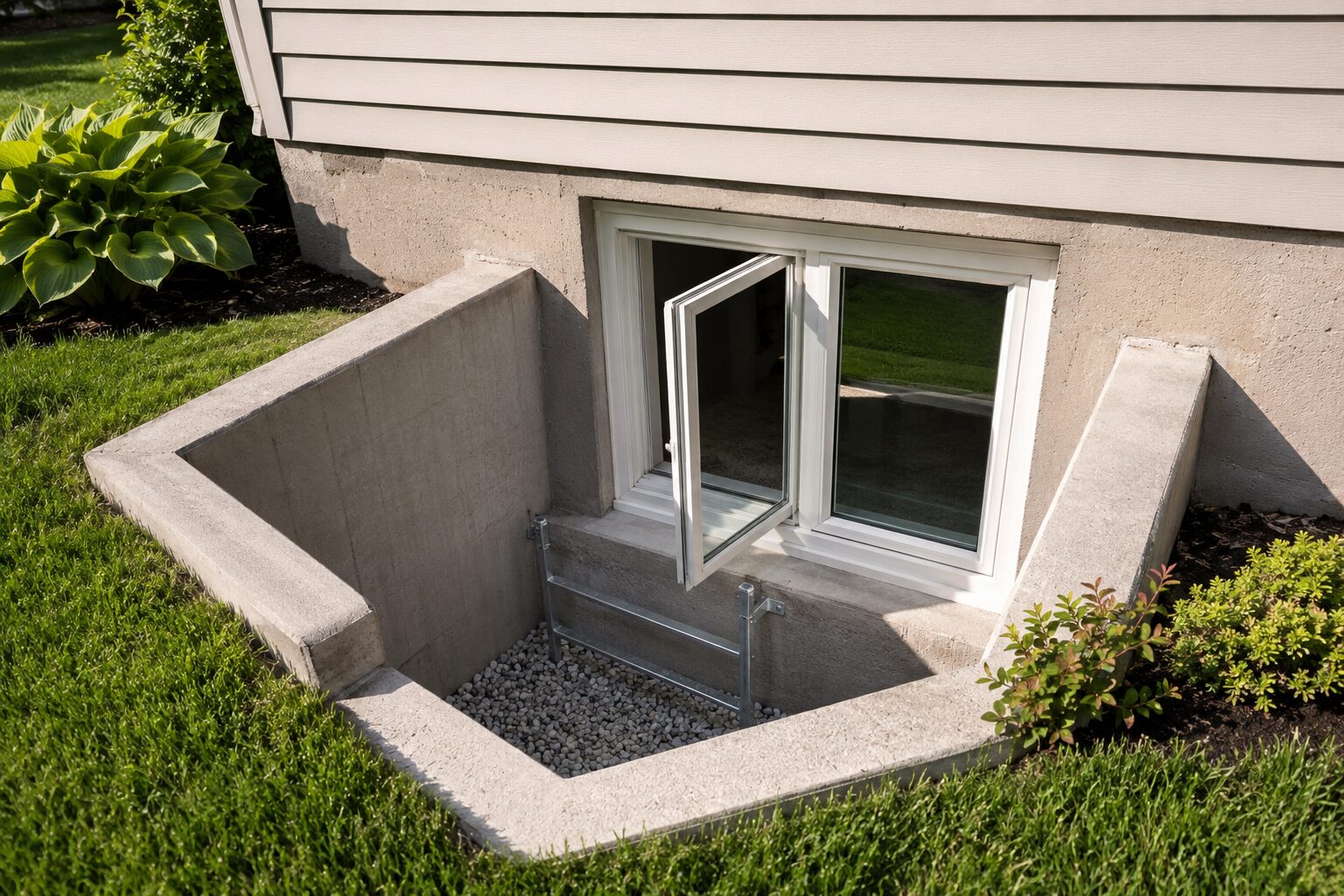
Egress windows are designed to be easy to open in a crisis. With one swift motion, you slide the latch and push it out. Unlike standard basement windows, egress windows are wide enough to let an adult pass through—fast.
You don’t want to be fumbling with locks or hinges in an emergency. That’s why it’s important to practice opening your window before you ever need to. Just like a fire drill, a quick run-through can give you muscle memory for the real thing.
Step 3: Use the Window Well to Exit
Most egress windows are paired with a well—a space dug out alongside the foundation with steps or a ladder built in. Think of it as your personal emergency staircase.
You swing your legs through the window, plant your feet on the ladder rungs, and climb up. Even in the dark, even through smoke, that ladder guides you up and out. It’s not glamorous—but in this moment, it’s lifesaving.
Step 4: Help Children or Other Family Members
If you’re a parent, you know your mind will go first to your kids. The beauty of egress windows is that they’re designed to be large enough and low enough for children to use, too. If needed, you can lift a child through the window first, then follow behind.
That’s why when you renovate, you’ll want to consider window placement not just for code compliance but also for practical family use. Is it reachable for little hands? Is the well ladder sturdy and secure?
Step 5: Get to Safety and Stay Out
Once outside, move away from the house. The last thing you want is to exit safely only to be caught by falling debris. Head toward the street or a neighbor’s yard, and wait for first responders.
Why This Matters Before Renovation
You’re balancing family life, work, and the constant to-do list of homeownership. Adding an egress window might feel like just another line item when finishing your basement. But in the middle of an emergency, it could mean the difference between panic and a clear escape route.
When you’re planning your basement renovation, picture yourself in that smoky, chaotic moment. Then imagine the relief of sliding open a window, climbing out, and breathing in fresh air. That’s the peace of mind an egress window provides.
Ready to make your basement safer and more functional? Installing an egress window not only brings light and livability to your space but also gives your family a way out when it matters most. Contact Window Man Inc. today to learn more about egress window installation in Indianapolis homes—and start your renovation with safety at the center.